How to Choose a Coffee Grinder for Your Brew Method: A Buyer's Comparison
A fine brewer and fresh beans will only take you so far. The grinder decides the size of the coffee particles, and particle size decides how fast water moves through the bed and how much flavour it carries away with it. Nail the grind and even a modest setup tastes clean and sweet. Miss it and good beans turn bitter, sour or muddy. The trick is not buying the most expensive machine on the shelf — it is buying the one that suits the way you actually brew.
Why the grinder matters more than the brewer
Every brewer works the same way: water contacts coffee, dissolves soluble material, and drains. The speed of that process depends on surface area. Fine particles give up their flavour quickly and can tip into bitterness; coarse ones release slowly and can leave a cup tasting thin and sour. A good grinder produces particles of a similar size, so the whole bed extracts at roughly the same rate.
A poor grinder produces dust and boulders in the same dose. The dust over-extracts while the boulders under-extract, and no adjustment fixes both at once — you simply move the problem from one end of the cup to the other. That is why two people can use identical beans and identical brewers and get very different results.
Freshness matters here too. Ground coffee stales within minutes, so a grinder you enjoy using every morning is worth more than a bag of pre-ground.
The main grinder types, compared
Blade grinders
Cheap, loud and inconsistent. A spinning blade chops unevenly, and the longer you run it the more dust you create. For coarse immersion brewing you can make it work by pulsing in short bursts and giving the grounds a shake, but for pour-over the fines will clog the filter and slow the drawdown. For espresso it is a non-starter: you cannot make repeatable small adjustments, which is exactly what espresso demands.
Hand burr grinders
The best value in coffee. Steel conical burrs crush rather than chop, giving an even grind that flatters filter brewing, Aeropress and French press. They are quiet, compact and easy to travel with. The trade-off is effort: a coarse dose for French press takes well under a minute, while a fine espresso dose can take two or three times as long, and the arm gets old by the second coffee of the day. Ceramic burrs are common on cheaper models; they work, but steel cuts faster and holds its edge longer.
Electric burr grinders
This is where most people should end up if they brew daily. Two designs dominate. Conical burrs are forgiving, tend to produce a little more texture in the cup, and are usually easier to clean. Flat burrs generally give a tighter particle spread and a cleaner, more separated flavour profile. Neither is automatically better; the difference is subtle and mostly matters once you are chasing the last few percent.
Look at the adjustment mechanism as carefully as the burrs. Stepped grinders click between fixed settings, which is fine for filter but can be too coarse for dialling in espresso. Stepless grinders move continuously, so you can make the tiny changes a shot needs. Also check retention — how much ground coffee stays inside the chute — because stale grounds from yesterday will land in today's cup. Single-dosing grinders are built to leave almost nothing behind.
Built-in grinders
Grinders attached to drip machines and home espresso machines are convenient, and the better ones are perfectly usable. Be realistic about the ceiling: most have limited adjustment, which is fine for filter and frustrating for espresso, where small changes make large differences in the cup.
Matching the grind to your brew method
Grind size is a range, not a rule, but these starting points will get you close. Adjust finer if the cup tastes weak and sour, coarser if it tastes harsh and drying.
- Espresso: very fine, like powdered sugar, and needs the smallest adjustment steps of any method.
- Moka pot: fine to medium-fine, slightly coarser than espresso.
- Aeropress: fine to medium, depending on steep time.
- Pour-over (V60, Kalita): medium, roughly the texture of table salt.
- Chemex and batch brewers: medium to medium-coarse, since the filter or basket is thicker.
- French press: coarse, like sea salt, so the mesh filter can hold it back.
- Cold brew: very coarse, closer to peppercorns.
If espresso is your daily drink
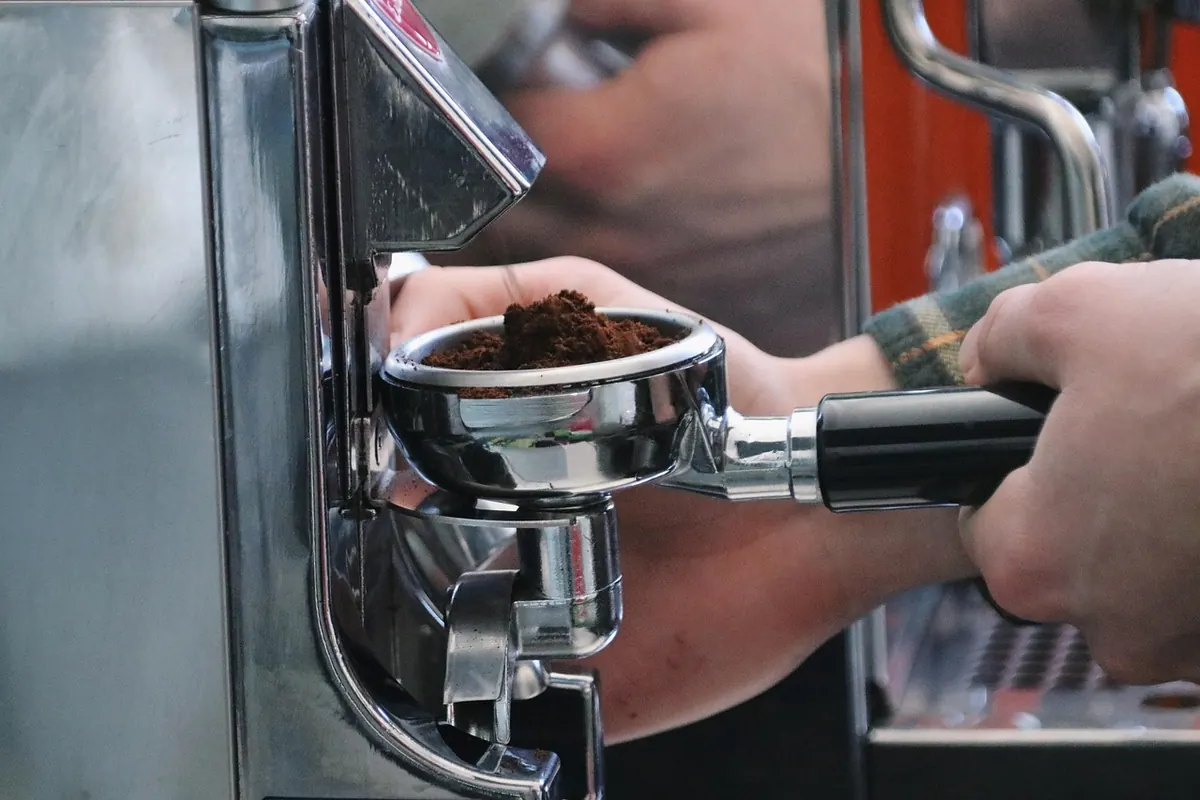
Espresso is the most demanding method and the one place where spending more genuinely shows in the cup. Prioritise fine, repeatable adjustment and low retention. A grinder that holds back a few grams means every shot starts with a blend of fresh and stale coffee, which makes dialling in a moving target.
Also think about workflow. If you switch beans often, single dosing saves waste; if you make several milk drinks in a row, a hopper is faster. Whatever you choose, buy a small scale and weigh the dose. Consistency in, consistency out.
Pour-over and filter: consistency above all
Filter brewing is more forgiving than espresso but less forgiving than people assume. Too many fines and the filter clogs, the bed stalls, and the brew turns bitter at the end. Here, uniformity beats raw burr size. A good hand grinder will often outperform a cheap electric one, and the money you save is better spent on a decent kettle and a scale.
If your pour-over drains in a rush at the start and then crawls to a stop, the grinder is usually the culprit, not your pouring technique.
French press and other immersion brewers
Immersion brewing is the most tolerant of an average grinder, because the coffee steeps rather than relying on water flowing evenly through a bed. Coarse and reasonably consistent is enough. A blade grinder can survive here, though you will still get more sludge in the bottom of the cup. A basic hand burr grinder is the sweet spot: cheap, quiet and better than the method really requires.
Budget: where to spend, where to save
Grinders are not a category where the cheapest option is a bargain. Set a realistic ceiling, then follow this order of priorities:
- Burrs before features. Good burrs in a plain body beat mediocre burrs with a screen and a timer.
- Adjustment before speed. A slow grinder you can dial in is more useful than a fast one you cannot.
- Skip the espresso tax if you do not drink espresso. A filter-focused hand grinder costs a fraction of an espresso-capable electric one.
- Buy once for the method you brew most. If you drink filter on weekdays and espresso at weekends, buy for the filter and accept a compromise on the shots.
- Leave room for a scale and a brush. Both cost little and both improve results more than an upgrade you cannot afford.
A short checklist before you buy
Write down your main brew method, how many coffees you make each day, and whether you switch beans often. Then check: does the grinder adjust finely enough for your method, how much coffee does it retain, is it easy to clean without tools, and will you actually enjoy using it at seven in the morning? Read a few owner reviews about noise and static, since those details never appear on the box.
Buy the grinder that fits your routine, not the one with the longest feature list. Clean the burrs every few weeks with a brush or a pinch of dry rice if the manufacturer allows it, keep beans sealed and cool, and grind just before brewing. Do those small things and even a modest grinder will reward you with better coffee than a far more expensive machine left to sit with stale grounds in the chute.
Photo: planet_fox / Pixabay